Deep groove ball bearing surface strengthening technology
From: XingMao DATE: 2025/12/22 Hits: 5922
Deep groove ball bearing surface strengthening technology
We know that under certain special operating conditions, Deep Groove Ball Bearings can achieve a lifespan longer than traditionally calculated, especially under light loads. These special operating conditions are when the rolling surfaces (raceways and rolling elements) are effectively separated by a lubricating oil film, limiting surface damage that may be ...
We know that under certain special operating conditions, Deep Groove Ball Bearings can achieve a lifespan longer than traditionally calculated, especially under light loads. These special operating conditions are when the rolling surfaces (raceways and rolling elements) are effectively separated by a lubricating oil film, limiting surface damage that may be caused by contaminants. In fact, under ideal conditions, a so-called permanent deep groove ball bearing life is possible.
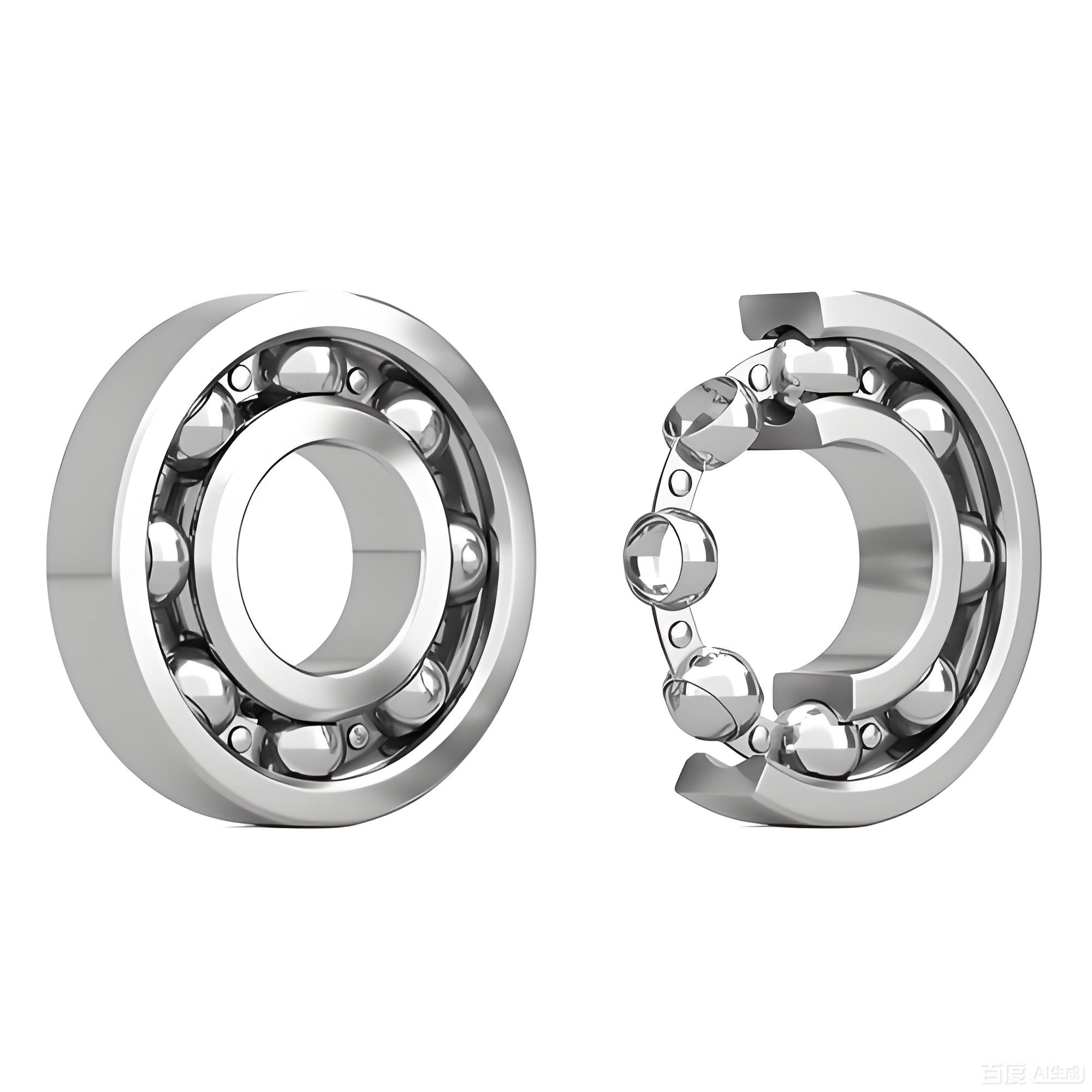 The lifespan of a rolling bearing is defined in revolutions (or hours of operation at a given speed): within this lifespan, a deep groove ball bearing should experience initial fatigue damage (sparging or chipping) on any of its bearing rings or rolling elements. However, both in laboratory tests and in actual use, it is evident that bearings with identical appearances under the same operating conditions can have vastly different actual lifespans. Furthermore, there are several other definitions of deep groove ball bearing "life," one of which is the so-called "operating life," which indicates the actual lifespan a bearing can achieve before failure. Failure is usually not caused by fatigue, but by wear, corrosion, seal damage, etc. Surface hardening, also known as work hardening, involves mechanically deforming the surface layer of a metal to create a hardened layer with high hardness and strength. This method includes shot peening, sandblasting, cold extrusion, rolling, cold rolling, and impact/explosive impact hardening. These methods, particularly for deep groove ball bearings, are characterized by increased dislocation density and refined subgrain structure in the hardened layer, leading to improved hardness and strength, reduced surface roughness, and significantly improved surface fatigue strength and reduced fatigue notch sensitivity. This strengthening method is simple, effective, and produces a continuous hardened layer without a clear boundary between the hardened layer and the substrate, making it less prone to detachment during use. Many of these methods are already used in the bearing industry: surface impact hardening of rolling elements is an example, and precision rolling has become a new method for processing and strengthening bearing rings.
Surface heat treatment, also known as surface quenching, involves rapidly heating the surface layer of a part using solid-state phase transformation. This includes flame hardening, high (medium) frequency induction hardening, laser hardening, and electron beam hardening. The characteristics of these methods for surface hardening of deep groove ball bearings are: localized surface heating and quenching with minimal workpiece deformation; rapid heating speed and high production efficiency; short heating time and minimal surface oxidation and decarburization. This method is particularly effective in improving the wear resistance and fatigue strength of large and extra-large bearing parts subjected to certain impact loads.
The method of surface strengthening of deep groove ball bearings by utilizing the solid-state diffusion of a certain element to change the chemical composition of the metal surface layer is called chemical heat treatment strengthening, also known as diffusion heat treatment. This includes boronizing, metal diffusion, carburizing and carbonitriding, nitriding and nitrogen-carbon diffusion, sulfurizing and sulfur-nitrogen-carbon diffusion, chromium diffusion, aluminum diffusion and chromium-aluminum-silicon diffusion, graphitization, etc., with numerous types and varying characteristics. The diffused element either dissolves into the base metal to form a solid solution or combines with other metal elements to form compounds. In short, the diffused element can change the chemical composition of the surface layer and obtain different phase structures. The processing technology of carburized bearing steel parts and the surface nitriding strengthening treatment of deep groove ball bearing sleeves both belong to this type of strengthening method.
Surface metallurgical strengthening is a surface strengthening technique that utilizes the remelting and solidification of the surface metal layer of a workpiece to obtain a desired composition or microstructure. Methods include surface self-fluxing alloys or composite powder coatings, surface melting and crystallization or amorphous treatment, and surface alloying. Deep groove ball bearings are characterized by the use of high-energy-density rapid heating to melt the metal surface layer or the alloying material coated on the metal surface, followed by self-cooling and solidification to obtain a strengthened layer with a special structure or specific properties. This special structure may be a refined crystalline structure, or it may be a supersaturated phase, metastable phase, or even an amorphous structure, depending on the surface metallurgical process parameters and methods. The rolling bearing industry has conducted research on laser heating strengthening of the working surface of miniature bearings with good results.
Surface thin film strengthening involves applying physical or chemical methods to coat the bearing metal surface with a strengthening film layer with different properties from the base material. It includes electroplating, electroless plating (chromium plating, nickel plating, copper plating, silver plating, etc.), as well as composite plating, brush plating, or conversion treatments. It also includes rapidly developing high-tech methods in recent years, such as vapor deposition thin film strengthening methods like CVD, PVD, and P-CVD, and ion implantation surface strengthening technology (also known as atomic metallurgy). Their common characteristic is that they can all form thin films with specific properties on the working surface to enhance its wear resistance, fatigue resistance, corrosion resistance, and self-lubricating properties. For example, ion implantation technology strengthens the working surface of deep groove ball bearings, significantly improving the bearing's wear resistance, corrosion resistance, and contact fatigue resistance, thereby multiplying the service life of the deep groove ball bearing.
The lifespan of a rolling bearing is defined in revolutions (or hours of operation at a given speed): within this lifespan, a deep groove ball bearing should experience initial fatigue damage (sparging or chipping) on any of its bearing rings or rolling elements. However, both in laboratory tests and in actual use, it is evident that bearings with identical appearances under the same operating conditions can have vastly different actual lifespans. Furthermore, there are several other definitions of deep groove ball bearing "life," one of which is the so-called "operating life," which indicates the actual lifespan a bearing can achieve before failure. Failure is usually not caused by fatigue, but by wear, corrosion, seal damage, etc. Surface hardening, also known as work hardening, involves mechanically deforming the surface layer of a metal to create a hardened layer with high hardness and strength. This method includes shot peening, sandblasting, cold extrusion, rolling, cold rolling, and impact/explosive impact hardening. These methods, particularly for deep groove ball bearings, are characterized by increased dislocation density and refined subgrain structure in the hardened layer, leading to improved hardness and strength, reduced surface roughness, and significantly improved surface fatigue strength and reduced fatigue notch sensitivity. This strengthening method is simple, effective, and produces a continuous hardened layer without a clear boundary between the hardened layer and the substrate, making it less prone to detachment during use. Many of these methods are already used in the bearing industry: surface impact hardening of rolling elements is an example, and precision rolling has become a new method for processing and strengthening bearing rings.
Surface heat treatment, also known as surface quenching, involves rapidly heating the surface layer of a part using solid-state phase transformation. This includes flame hardening, high (medium) frequency induction hardening, laser hardening, and electron beam hardening. The characteristics of these methods for surface hardening of deep groove ball bearings are: localized surface heating and quenching with minimal workpiece deformation; rapid heating speed and high production efficiency; short heating time and minimal surface oxidation and decarburization. This method is particularly effective in improving the wear resistance and fatigue strength of large and extra-large bearing parts subjected to certain impact loads.
The method of surface strengthening of deep groove ball bearings by utilizing the solid-state diffusion of a certain element to change the chemical composition of the metal surface layer is called chemical heat treatment strengthening, also known as diffusion heat treatment. This includes boronizing, metal diffusion, carburizing and carbonitriding, nitriding and nitrogen-carbon diffusion, sulfurizing and sulfur-nitrogen-carbon diffusion, chromium diffusion, aluminum diffusion and chromium-aluminum-silicon diffusion, graphitization, etc., with numerous types and varying characteristics. The diffused element either dissolves into the base metal to form a solid solution or combines with other metal elements to form compounds. In short, the diffused element can change the chemical composition of the surface layer and obtain different phase structures. The processing technology of carburized bearing steel parts and the surface nitriding strengthening treatment of deep groove ball bearing sleeves both belong to this type of strengthening method.
Surface metallurgical strengthening is a surface strengthening technique that utilizes the remelting and solidification of the surface metal layer of a workpiece to obtain a desired composition or microstructure. Methods include surface self-fluxing alloys or composite powder coatings, surface melting and crystallization or amorphous treatment, and surface alloying. Deep groove ball bearings are characterized by the use of high-energy-density rapid heating to melt the metal surface layer or the alloying material coated on the metal surface, followed by self-cooling and solidification to obtain a strengthened layer with a special structure or specific properties. This special structure may be a refined crystalline structure, or it may be a supersaturated phase, metastable phase, or even an amorphous structure, depending on the surface metallurgical process parameters and methods. The rolling bearing industry has conducted research on laser heating strengthening of the working surface of miniature bearings with good results.
Surface thin film strengthening involves applying physical or chemical methods to coat the bearing metal surface with a strengthening film layer with different properties from the base material. It includes electroplating, electroless plating (chromium plating, nickel plating, copper plating, silver plating, etc.), as well as composite plating, brush plating, or conversion treatments. It also includes rapidly developing high-tech methods in recent years, such as vapor deposition thin film strengthening methods like CVD, PVD, and P-CVD, and ion implantation surface strengthening technology (also known as atomic metallurgy). Their common characteristic is that they can all form thin films with specific properties on the working surface to enhance its wear resistance, fatigue resistance, corrosion resistance, and self-lubricating properties. For example, ion implantation technology strengthens the working surface of deep groove ball bearings, significantly improving the bearing's wear resistance, corrosion resistance, and contact fatigue resistance, thereby multiplying the service life of the deep groove ball bearing.