Sales Hotline:
+86-13793088586
Sales Hotline:
+86-13793088586Even under ideal operating conditions, even the highest-quality bearings are susceptible to surface flaking—this is not a quality issue, but rather the natural consequence of the material being subjected to long-term alternating stress, professionally known as "fatigue spalling." It is a decisive factor in determining the theoretical lifespan of a bearing and a typical indicator of its "end of life."
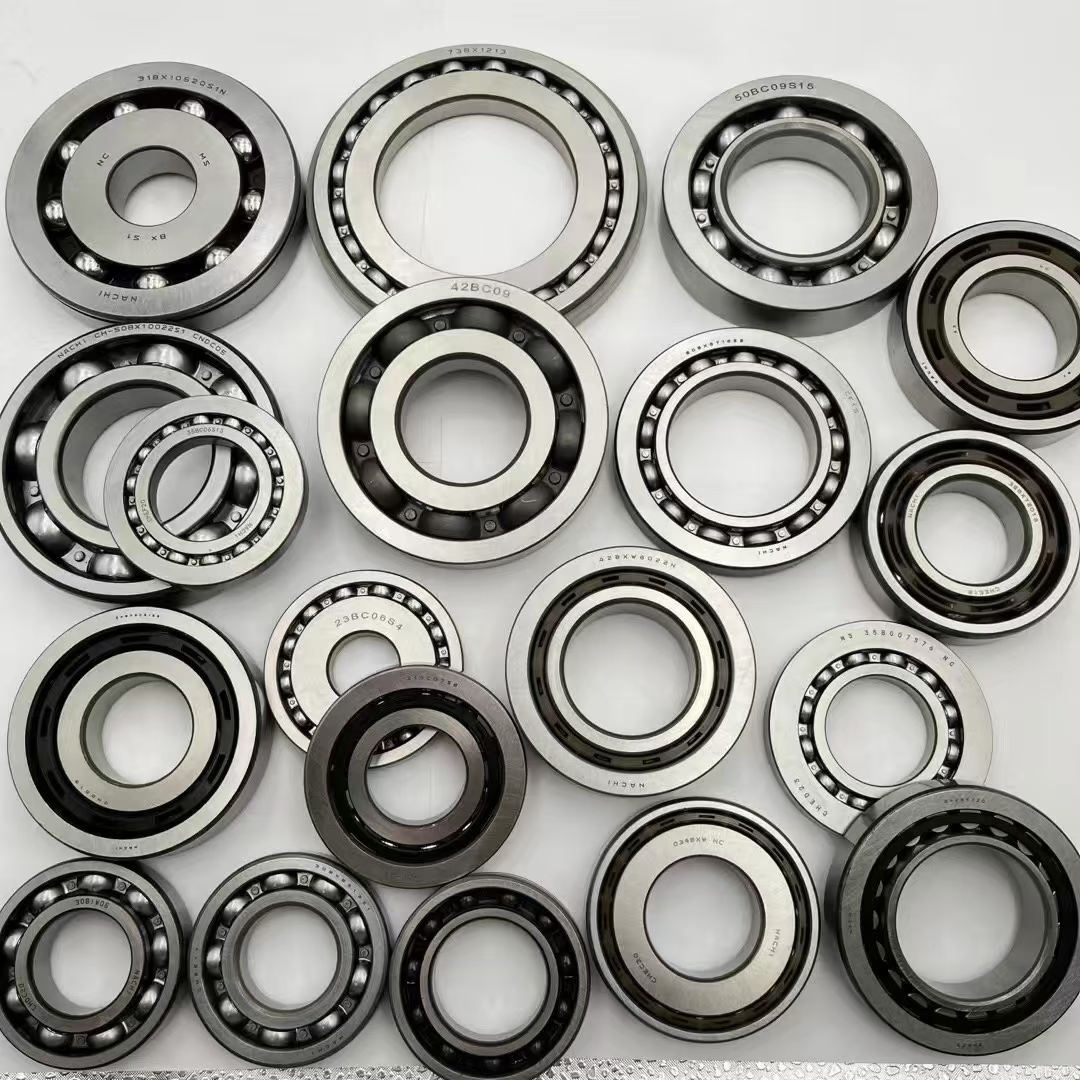
Fatigue spalling is not a sudden event, but a gradual process from the initiation of microscopic cracks to the macroscopic detachment of material. Based on the location of crack origin, it is mainly divided into three types: 1. Surface pitting spalling: Initiated by tiny surface protrusions or processing defects, initially appearing as fine pitting, common in poorly lubricated or contaminated environments. 2. Subsurface deep spalling: Cracks originate in the region of maximum shear stress within the material, expanding to form a unique "butterfly wing" morphology, resulting in deeper spalling pits and more severe damage. 3. Hardened layer interface spalling: Occurs at the interface between the hardened layer and the base material of carburized or induction-hardened bearings, often due to improper heat treatment gradient control.
Various external and internal factors can accelerate this process: 1. Abnormal load: Such as sudden impact, continuous overload, or uneven force distribution; 2. Installation errors: Shaft misalignment, insufficient bearing seat rigidity, etc.; 3. Material and process defects: Including inclusions, uneven microstructure, or excessive residual stress from heat treatment.
In short, fatigue spalling is the inevitable result of accumulated damage in metal under "repeated stress," similar to the functional decline of the human body after prolonged fatigue. Understanding this mechanism helps us to delay failure and maximize bearing service life in design, selection, and maintenance.
| ||