The Truth About Lubrication Failure: The Interplay Between Oil Film and Surface Roughness
From: XingMao DATE: 2026/10/30 Hits: 4
The Truth About Lubrication Failure: The Interplay Between Oil Film and Surface Roughness
The reliability of bearing lubrication cannot be determined solely by the thickness of the oil film. Even surfaces that appear perfectly smooth to the naked eye contain microscopic peaks and valleys—a property known as surface roughness. What truly dictates the lubrication state is the ratio of the oil film thickness to the combined roughness of the two cont...
The reliability of bearing lubrication cannot be determined solely by the thickness of the oil film. Even surfaces that appear perfectly smooth to the naked eye contain microscopic peaks and valleys—a property known as surface roughness. What truly dictates the lubrication state is the ratio of the oil film thickness to the combined roughness of the two contacting surfaces; this is known as the film thickness ratio (Λ).
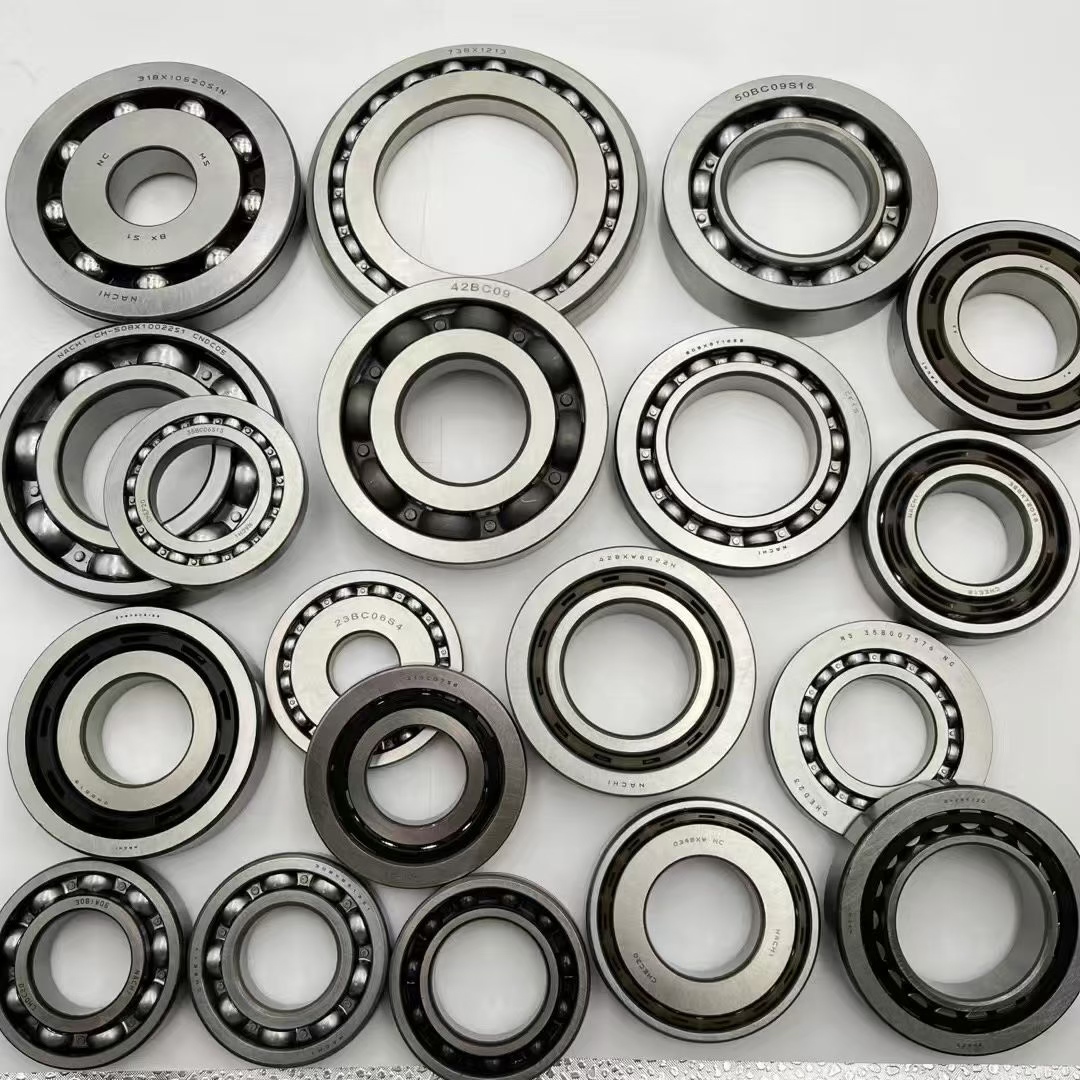 When the film thickness ratio is sufficiently large, the oil film completely separates the two contacting surfaces, preventing direct metal-to-metal contact. This minimizes bearing wear and extends service life. Conversely, if the film thickness ratio is too small, the microscopic surface peaks can penetrate the oil film, leading to localized stress concentrations. This, in turn, can trigger failure modes such as pitting and spalling.
This reveals that striving for an ultra-smooth surface is not necessarily the optimal approach. The key to reliable lubrication lies in the balance between the oil film and the surface roughness—the film must be thick enough to cover the height of the surface peaks, maintaining an appropriate ratio to ensure effective protective lubrication. Therefore, when evaluating bearing lubrication performance, the film thickness ratio serves as a more reliable metric than considering oil film thickness or surface roughness in isolation.